
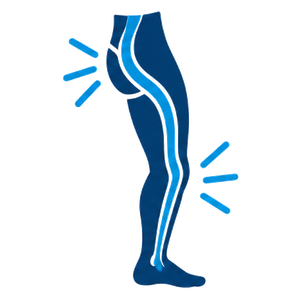
If you’re wondering when to see a chiropractor for sciatica, understanding your symptoms is an important first step. Sciatica can make everyday activities such as sitting, walking, standing, or even sleeping uncomfortable. For some people, it begins as a dull ache in the lower back or buttock. For others, it causes sharp, shooting pain that travels down one leg, sometimes reaching the foot.
If you’re experiencing these symptoms, you may be wondering whether chiropractic care can help.
Chiropractic care can help patients with sciatica by improving spinal movement, reducing pain, and addressing contributing musculoskeletal problems. However, the most appropriate treatment depends on what’s causing the nerve irritation and the severity of your symptoms.
At Chiropractic Health Associates, we believe early evaluation is important. Understanding the cause of your symptoms can help determine an appropriate treatment plan before pain begins interfering with more of your daily activities.
What Is Sciatica?
Sciatica refers to pain that travels along the path of the sciatic nerve, usually from the lower back or buttock down one leg.
The sciatic nerve is the largest nerve in the body. It forms from nerve roots in the lower spine and travels through the buttock and down the leg, where its branches help control movement and sensation.
Sciatica commonly develops when a nerve root in the lumbar spine becomes irritated or compressed. This condition is also known as lumbar radiculopathy.
Although sciatica frequently affects only one side of the body, symptoms can occasionally occur in both legs.
What Causes Sciatica?
Several conditions can irritate the nerves that contribute to the sciatic nerve.
Herniated or Bulging Discs
The discs between your vertebrae act as cushions and help your spine move smoothly.
When a disc herniates, part of its inner material can push outward and irritate a nearby nerve root. This is a common cause of sciatica.
Degenerative Disc Changes
As we age, spinal discs may lose height and undergo structural changes. These changes can sometimes contribute to narrowing around the spinal nerves.
However, disc degeneration is also common in people without pain.
Spinal Stenosis
Spinal stenosis occurs when spaces within the spine become narrower, potentially placing pressure on nerves.
Symptoms may worsen during standing or walking and improve when sitting or bending forward.
Spondylolisthesis
Spondylolisthesis occurs when one vertebra slips forward relative to another.
In some cases, this change can narrow the openings where spinal nerves exit, contributing to leg pain or neurological symptoms.
Other Causes
Less commonly, sciatic-type pain may result from irritation of the sciatic nerve outside the spine, including certain deep gluteal conditions.
Because several problems can produce similar symptoms, identifying the underlying cause is essential.
What Are the Symptoms of Sciatica?
Sciatica can produce several different sensations, depending on the location and severity of nerve irritation.
Common symptoms include:
- Shooting or burning pain: Pain that travels from the lower back or buttock into the thigh, calf, or foot.
- Tingling or numbness: A pins-and-needles sensation or reduced feeling in part of the leg.
- Muscle weakness: Difficulty lifting the foot, standing on the toes, or performing certain leg movements.
- Pain with sitting: Symptoms that become worse after prolonged sitting or driving.
- Pain with coughing or sneezing: Increased pressure around an irritated nerve root may temporarily intensify symptoms.
Not everyone with sciatica experiences significant lower back pain. For some patients, leg pain is the primary complaint.
When Should You See a Chiropractor for Sciatica?
When to Visit a Chiropractor for Sciatica
At Chiropractic Health Associates, we encourage patients to seek an evaluation when symptoms first develop rather than waiting until pain becomes severe.
Early assessment can help identify whether symptoms are consistent with nerve irritation and whether conservative chiropractic treatment is appropriate.
Waiting may sometimes contribute to prolonged discomfort, reduced activity, or changes in movement as you compensate for pain.
Our goal is to identify the problem early, begin appropriate care when indicated, and help you return to your normal activities as safely and efficiently as possible.
If you’re experiencing pain that travels down your leg, persistent tingling, or discomfort that interferes with walking, sitting, or sleeping, scheduling an evaluation is a reasonable next step.
However, progressive weakness, new bladder or bowel problems, or numbness around the groin require urgent medical attention.
Can Chiropractic Care Help Relieve Sciatica?
Chiropractic care may be beneficial for some patients with sciatica, particularly when symptoms are associated with mechanical problems involving the lumbar spine.
Your chiropractor will first evaluate your medical history, symptoms, spinal movement, muscle strength, reflexes, and sensation.
Depending on your examination findings, treatment may include several approaches.
Spinal Manipulation or Mobilization
Spinal manipulation and mobilization are hands-on techniques intended to improve joint movement and reduce discomfort.
Some research suggests spinal manipulation may provide benefits for selected patients with sciatica, although evidence is more limited than it is for uncomplicated lower back pain.
Therapeutic Exercises
Specific exercises may help improve spinal mobility, strengthen supporting muscles, and gradually restore normal activity.
Exercises are selected according to your symptoms, examination findings, and tolerance for movement.
Soft Tissue Therapies
Manual therapies directed toward surrounding muscles may help reduce muscular tension and improve comfort.
Activity and Posture Recommendations
Your chiropractor may recommend changes to sitting habits, lifting techniques, or daily activities that aggravate your symptoms.
Remaining appropriately active is often preferable to prolonged bed rest.
Treatment should be individualized, and patients with significant or worsening neurological findings may need additional medical evaluation.
Will You Need X-Rays for Sciatica?
At Chiropractic Health Associates, X-rays are part of our standard evaluation process for nearly all new chiropractic patients.
We believe understanding the structure and condition of the lumbar spine is an important part of making informed treatment decisions.
X-rays can help identify certain structural abnormalities, degenerative changes, and other findings that may influence treatment recommendations or indicate the need for additional evaluation.
However, X-rays cannot directly show most disc herniations or nerve compression. When these conditions require further investigation, MRI or other medical testing may be necessary.
Your chiropractor will consider your medical history, symptoms, examination findings, and individual circumstances when determining the appropriate imaging and treatment approach.
Our goal is to provide thorough evaluations and make informed decisions with patient safety as a priority.
When Is Sciatica a Medical Emergency?
Although most cases of sciatica do not require emergency treatment, certain symptoms may indicate serious nerve compression.
Seek emergency medical attention if you experience:
- New loss of bladder or bowel control
- Numbness around the groin or saddle region
- Rapidly worsening leg weakness
- Severe symptoms affecting both legs, especially with neurological changes
These symptoms may indicate cauda equina syndrome or another serious condition requiring immediate evaluation.
Take the First Step Toward Sciatica Relief
Sciatica can interfere with work, sleep, exercise, and everyday activities, but understanding the cause of your symptoms is the first step toward finding an appropriate treatment approach.
At Chiropractic Health Associates, we believe early evaluation allows us to identify potential contributing factors and determine whether chiropractic care is appropriate.
Whether your symptoms began recently or have been bothering you for months, our goal is to help you understand your condition and explore treatment options.
Experiencing sciatic pain? Contact Chiropractic Health Associates to schedule an evaluation and take the first step toward improving your comfort and mobility.
Ready to schedule an appointment? Request your visit online.