
SPINAL DECOMPRESSION
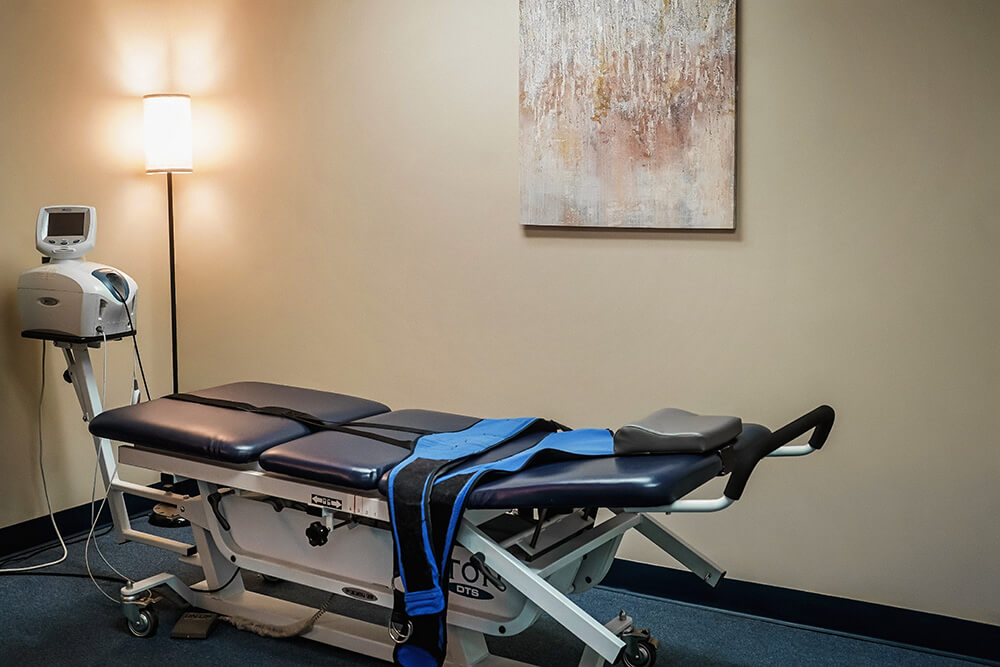
Between the vertebrae in our backs, there are small, “rubbery” cushions that work as shock absorbers and allow the spine to move. These discs are crucial to the health of our spine and living a pain-free, mobile life. Unfortunately, around 35% of Americans have some form of disc issue, mostly herniated discs or bulging discs. Over time, with normal wear and tear on the spine, these circular disks can flatten (bulge) or the disks can rip open (herniate). Both herniation and bulging can cause unnatural pressure to be placed on the spine and can cause pain. Depending on the location of the deformed disc, the pain can cause numbness, tingling, shooting, or burning pain in the body. To alleviate the pressure on the disc, chiropractors can prescribe Spinal Decompression.
What is Spinal Decompression?
In 1985, Dr. Allan Dyer developed the first nonsurgical form of spinal decompression. Nonsurgical spinal decompression is a form of mechanical traction focused on relieving lower back or neck pain by elevating the pressure placed on deformed or injured discs in the spine. Although there are many forms of decompression, Chiropractic Health Associates uses two main forms: Y-axis traction and Intersegmental traction.
Y-Axis Traction
There are many different methods for y-axis traction, we utilize a decompression table. With the decompression table, we can focus on two areas, neck and low back. With neck table decompression, patients lay their head between two neck pillows and a strap is placed above their eyebrows. A member of the staff will adjust the machine to a set number and the neck cushions will slowly and gently begin to pull on the spine to release pressure on the neck. This therapy will add and release pressure on the spine for approximately 10 minutes. With low back table decompression, patients lay on top of two straps. A staff member will secure one strap to the chest and the other strap to the abdomen. After both straps are secured, a staff member will adjust the machine to a set number and the upper strap will keep the upper body still, while the lower strap will be gently and slowly pulled to release pressure on the low back.
Intersegmental Traction
Although Y-axis and intersegmental traction work to decompress the spine, the method is different. With intersegmental traction, the patient lays flat on the decompression bed and staff will adjust the bed. While on the bed, the patient will feel rollers in the bed begin to push and pull against the spine to create space between the vertebrae to lift pressure off discs. This is a great option for pain in the mid and low back, and for patients with isolated disc issues.
When is it used?
Spinal decompression is a great option for patients that suffer from disc and nerve issues. When discs herniate or bulge, the nerve root in the spine can become aggravated or exposed, causing nerve pain in the body. To help diagnose and isolate these disc issues the chiropractor will perform tests and imaging. After the initial intake appointment, the chiropractor will discuss the patient's imaging and if needed, will add spinal decompression to prescribed therapies.
What can it treat?
Spinal decompression can treat many nerve or disc issues, including:
- Bulging discs
- Herniated discs
- Degenerating discs
- Sciatic pain
- Limb numbness and/or tingling
- Pinched nerves
- Intradiscal pressure
- Spinal stenosis
What are the benefits?
Through addressing disc and nerve issues, spinal decompression can provide:
- Increased blood circulation
- Reduction of nerve compression
- Lower pain levels
- Better posture
- Improved range of motion
- Improved flexibility
- Decreases stress levels
- Reduce the need for spinal surgery
- Reduce herniated discs
- Reduce joint pain
Questions about spinal decompression and if it can help you? Call Chiropractic Health Associates for more information! (704)-739-3373.